
Will local government reorganisation pause innovation?

Local government reorganisation is gaining momentum, and councils are facing increasing pressure to ensure new structures are effective from day one.
Establishing larger unitary authorities will require significant time, investment and leadership attention. Alongside ongoing pressures in adult and children’s services, the potential need to separate some functions, and the challenge of managing larger and more complex estates, organisational capacity is likely to come under considerable strain.
This pressure will be particularly evident in frontline services. Waste, facilities management and integrated community equipment services (ICES) cannot simply be merged and expected to deliver immediate gains. Different operating models, workforces, fleets, depots and warehouses must first be brought together and aligned before efficiencies can be achieved at scale.
There is a risk that vesting day becomes focused solely on achieving a safe and legal transition. While that approach may protect service continuity, it risks missing the wider opportunity for improvement. Reorganisation should be about more than compliance. It should provide a platform to redesign services, improve performance and deliver sustainable efficiencies for the future.
This is one reason why interest in the LATCo model continues to grow. A local authority trading company can provide the flexibility needed to integrate and rationalise services more effectively, while supporting a more commercial approach to investment, innovation and service delivery. However, creating a LATCo from the ground up during a period of significant organisational change may be difficult for councils with already stretched resources.
For many authorities, a partnership approach may offer a more practical solution. Working through a joint venture with an established LATCo such as Norse Group can help new unitaries move beyond a purely safe and legal transition and create genuine capacity for transformation. It combines commercial expertise with public service values, while a co-ownership model provides councils with strong governance, oversight and the flexibility to adapt as priorities change.
As local government reorganisation progresses, councils will need to decide whether reform is simply about managing change or using it as a catalyst for improvement. In that context, a partnership LATCo model offers a credible way to keep innovation at the heart of the agenda, rather than allowing it to become a casualty of reorganisation.
Related Articles

Supporting confident change across local government
Councils across the country are balancing major transformation programmes alongside the day-to-day responsibility of delivering essential services to residents.

LATCos offer flexibility for service integration and disaggregation
Justin Galliford explains how the LATCo model can help councils merge services effectively while providing a practical alternative to disaggregation.
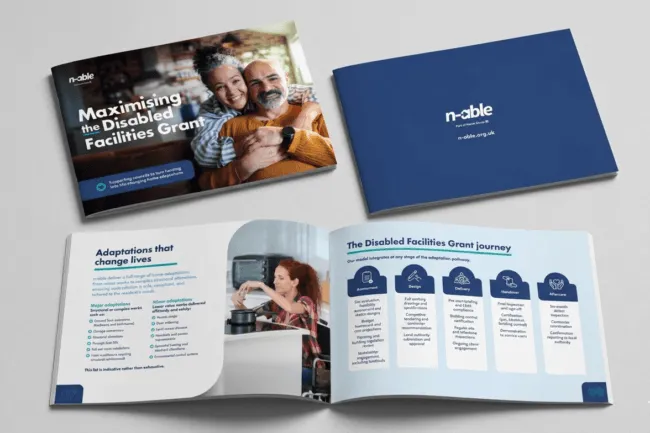
Maximising the Disabled Facilities Grant playbook
The right home adaptation, delivered at the right time, can be life changing. It helps prevent falls, reduces hospital admissions, eases pressure on carers, and […]
© Norse Group 2026. Registered in England and Wales No. 05694657
Employee Portal